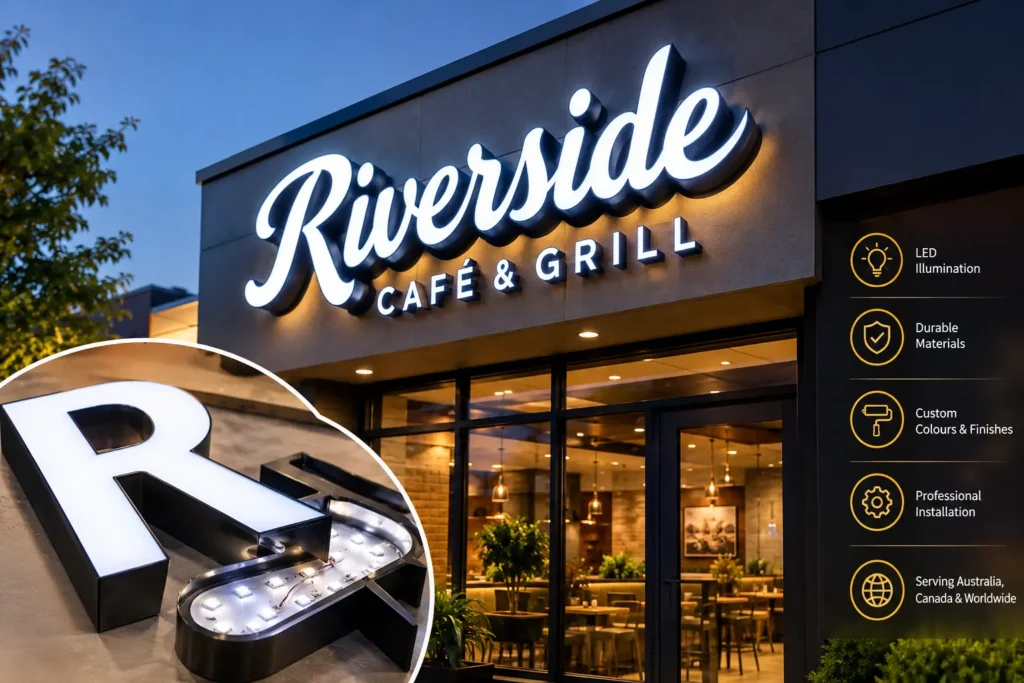
Custom channel letter signs help businesses create a professional storefront, improve brand visibility, and make their name easier to recognize from the street. From restaurants and retail shops in Australia to corporate offices in Canada, the USA, and other international markets, dimensional lettering offers a practical way to display a brand with clarity and style.
For businesses looking to upgrade their exterior branding, channel letters combine three-dimensional construction, customizable finishes, and energy-efficient LED illumination. The right design can make a storefront more noticeable during the day while maintaining excellent visibility after sunset.
At Antique Signage, custom signage design focuses on the relationship between materials, lighting, lettering, and brand identity. Understanding these elements helps business owners choose a sign that suits their building, audience, and long-term requirements.
What Makes Channel Letter Signage Different?
Channel letters are individually fabricated, three-dimensional letters or shapes used to display a business name, logo, or message. Unlike flat printed signs, each character has its own depth, structure, and finish, creating a more prominent appearance on a building facade.
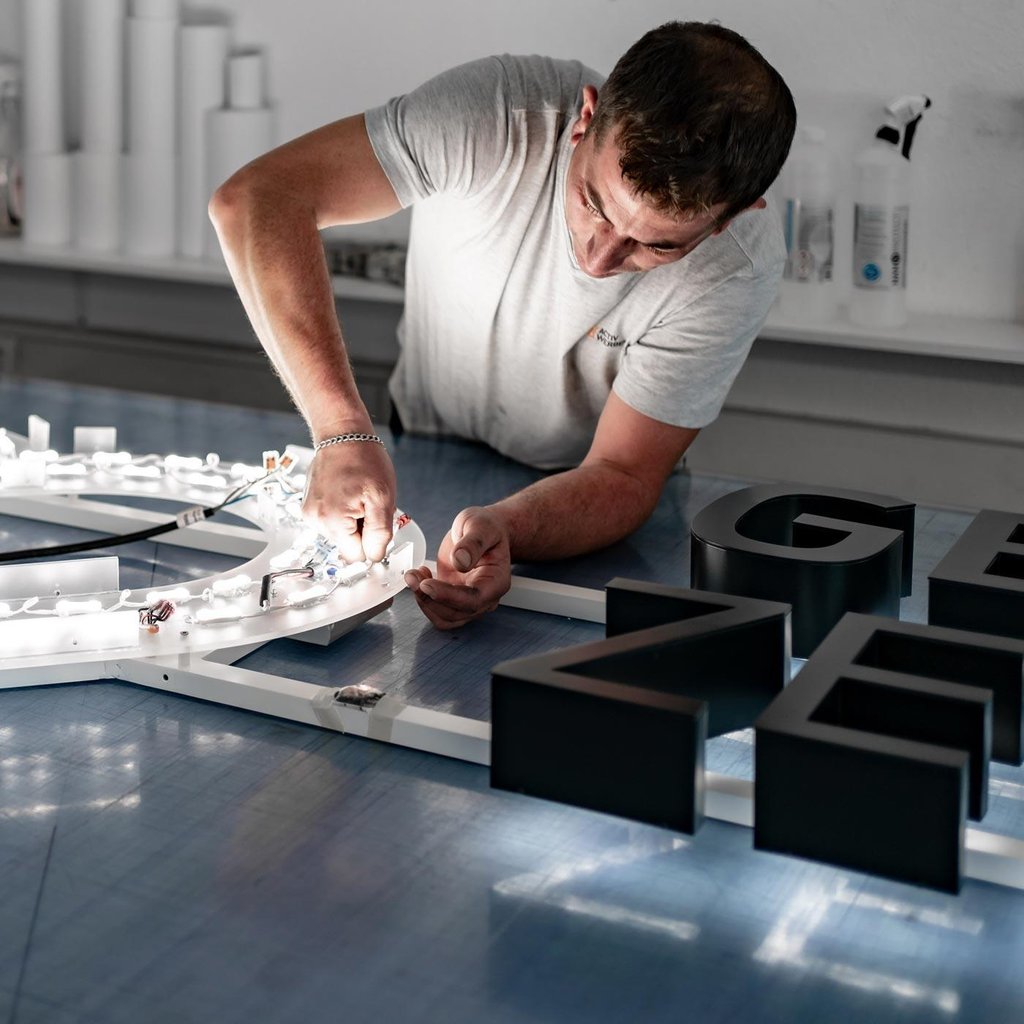
Manufacturers commonly use aluminum for the letter returns and backs, acrylic for illuminated faces, and LED modules for internal lighting. The precise combination depends on the chosen design and whether the sign needs front illumination, a halo effect, or another lighting arrangement.
A typical fabricated letter includes:
- Face: The front surface, which may use colored or translucent acrylic.
- Returns: The side walls that give each character its three-dimensional depth.
- Back: The rear panel that helps enclose the letter structure.
- LED modules: Lighting components installed inside illuminated letters.
- Mounting system: The hardware, panel, or raceway used to secure the finished sign.
This construction allows businesses to customize the size, typography, color, depth, and lighting of individual characters instead of relying on a standard, one-size-fits-all sign.
The result is a versatile signage solution for storefronts, shopping centers, hospitality venues, medical practices, offices, and other commercial properties.
Popular Lighting Styles for Architectural Letter Signs
Lighting influences how a sign looks, how clearly customers can read it, and how it fits the surrounding architecture. Before selecting a design, consider the viewing distance, building color, ambient lighting, and impression you want your business to create.
1. Front-Lit Channel Letters
Front-lit letters use translucent faces that allow internal LED lighting to shine outward. The individual characters appear bright, making the business name easy to identify from sidewalks, parking areas, and nearby roads.
This style is particularly suitable for:
- Restaurants, cafes, and takeaway businesses
- Retail stores and shopping centers
- Supermarkets and convenience stores
- Gyms and entertainment venues
- Businesses located on busy streets
Brand colors can be incorporated into the acrylic faces or applied through suitable translucent finishes. For businesses that prioritize clear nighttime visibility, front-lit lettering is often a practical starting point.
2. Halo-Lit or Reverse-Lit Letters
Halo-lit letters create a softer appearance by directing light toward the wall behind each character. The letter faces are generally opaque, while the rear lighting produces a glow around their outlines.
This effect works especially well for professional offices, boutique retailers, hotels, beauty studios, and premium commercial interiors or exteriors.
The background surface matters. A smooth, light-colored wall generally produces a more even halo than a dark, heavily textured surface. The distance between the letters and the wall also affects the final appearance. Sign Media Canada+1
3. Front-and-Halo-Lit Letters
Combination-lit letters bring together two effects: illumination through the front face and a glow behind the character. This can help a logo stand out while retaining the refined look of reverse lighting.
The design may use contrasting face and halo colors, although the combination should remain consistent with the business’s branding. It is particularly useful when a company wants both strong readability and a distinctive architectural finish.
4. Non-Illuminated Dimensional Letters
Not every business needs internal lighting. Solid metal letters, painted aluminum characters, and other dimensional lettering options can provide depth without electrical components.
These are worth considering for buildings with strong exterior lighting, indoor reception areas, covered walkways, or locations where illuminated signs are restricted. External spotlights can be added when extra nighttime visibility is required.
The most suitable style depends on the building, the surrounding environment, the intended viewing distance, and the business’s visual identity.
How to Choose the Right Materials and Finishes
Material selection affects appearance, durability, maintenance, and fabrication cost. A sign that looks attractive in a design preview must also withstand the weather conditions and installation environment of its intended location.
Aluminum is widely used for channel letter sides and backs because it is lightweight, easy to fabricate, and compatible with painted finishes. Properly specified and maintained, it can provide dependable performance in outdoor commercial applications.
Acrylic is commonly used for illuminated letter faces. It is available in different colors and light-transmitting properties, making it suitable for brand-specific designs. The correct grade and thickness should be selected for the application.
Stainless steel may be appropriate when the visible surface is a central part of the design. Brushed, polished, and decorative finishes can create a sophisticated appearance for premium retail, hospitality, and corporate signage.
Protective coatings and finishes help maintain the intended appearance. The choice should account for sun exposure, moisture, pollution, cleaning practices, and the manufacturer’s recommendations.
When comparing materials, ask your sign manufacturer about:
- Expected outdoor performance and maintenance requirements
- Finish samples under daylight and nighttime lighting
- Resistance to corrosion and fading in the intended environment
- Compatibility between the face, returns, adhesives, and lighting components
- Access for future repairs or replacement of electrical parts
Material quality alone does not determine a sign’s lifespan. Good fabrication, suitable installation, drainage where needed, and appropriate maintenance all contribute to reliable performance.
Why Businesses Invest in Dimensional Lettering
A business sign is more than a decorative feature. It helps customers identify a location, distinguish a brand from nearby competitors, and understand where to enter a building.
Stronger Brand Recognition
Individual letters can reproduce a business name, logo, and brand colors in a format that feels integrated with the architecture. Custom typography and carefully proportioned lettering can help establish a recognizable appearance across multiple locations.
Better Visibility After Dark
Illuminated signage helps a business remain identifiable after daylight hours. The effectiveness depends on brightness, contrast, viewing distance, ambient light, and the direction from which customers approach.
The objective should be legibility rather than excessive brightness. Well-planned illumination can make the name easier to read without overwhelming the facade.
A Professional Storefront Appearance
Dimensional letters add depth and shadow that flat graphics cannot reproduce in the same way. Metal finishes, clean spacing, and coordinated lighting can help create a polished exterior for a restaurant, showroom, office, or retail premises.
Design Flexibility
Businesses can select individual character heights, letter depths, fonts, finishes, lighting colors, and mounting arrangements. This flexibility makes the format suitable for both straightforward wordmarks and more detailed logos.
Potential Long-Term Value
A well-designed sign can remain part of a business’s exterior branding for years. However, the overall value depends on its purchase price, installation costs, electricity consumption, maintenance needs, and expected service life.
For a fair comparison, evaluate the complete project rather than choosing a supplier solely on the lowest initial quote.
Where Custom Letter Signs Work Best
Different business environments have different signage priorities. The right design should respond to how customers approach the property and how the building is used.
| Business type | Suitable signage approach |
|---|---|
| Restaurants and cafes | Bright front-lit letters with clear brand colors |
| Corporate offices | Refined metal letters or subtle halo lighting |
| Retail storefronts | High-contrast illuminated lettering |
| Hotels and hospitality | Premium finishes with carefully controlled lighting |
| Medical and dental clinics | Clear, readable lettering with restrained illumination |
| Shopping centers | Consistent dimensions that meet property signage guidelines |
| Gyms and entertainment venues | Bold typography with strong nighttime visibility |
| Multi-location brands | Standardized colors, letter proportions, and construction |
For example, a restaurant on a busy road may benefit from bright front-facing illumination that customers can recognize quickly. A professional office in a modern building might instead use brushed metal letters with a soft halo to complement the facade.
These are starting points rather than fixed rules. A good design considers the actual building, the brand’s identity, local requirements, and the expected viewing conditions.
Mounting Options and Installation Planning
The mounting method affects the finished appearance, installation time, access to electrical components, and suitability for different building surfaces. It should be selected during the design stage rather than treated as an afterthought.
Direct Wall Mounting
Individual letters are attached directly to the facade using appropriate fixings. This arrangement creates a clean appearance because the mounting structure is less visible.
However, installation requires careful positioning, suitable wall anchors, and a coordinated plan for wiring. The wall must be capable of supporting the sign safely.
Raceway Mounting
A raceway is a metal enclosure that supports the letters and can house wiring and electrical components. The enclosure is attached to the building, reducing the need to install every character independently into the facade.
This method can simplify installation and future servicing, although the visible enclosure may influence the design. Building owners and property managers may also have rules about raceway size, color, and placement.
Backboard or Panel Mounting
Letters can be attached to a dedicated panel that is then secured to the building. A panel provides a defined background for the design and can help organize complex logos, symbols, and multiple lines of text.
The panel’s color, material, and dimensions should complement the architecture instead of competing with the lettering.
Check the Building Before Ordering
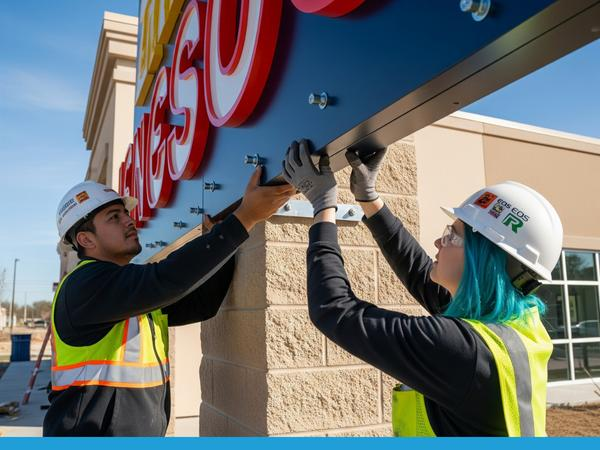
Before manufacturing begins, confirm the facade material, fixing locations, access equipment, electrical supply, and installation responsibilities. Glass, masonry, metal cladding, and lightweight wall systems require different approaches.
Illuminated signs should be installed by appropriately qualified professionals, with electrical connections, structural fixings, and weatherproofing handled according to applicable requirements. A mounting template and approved fabrication drawings can help reduce positioning errors. Reverse & Halo Lit Signs+1
Custom Channel Letter Signs for Australian and International Businesses
Businesses sourcing signage for Australia, Canada, the United States, the United Kingdom, and other markets should plan for local building conditions and approval requirements from the beginning.
A design that works on one property may require changes elsewhere because of differences in facade construction, climate, electrical systems, landlord rules, or local signage regulations.
Consider Australian Conditions
In Australia, the appropriate sign specification depends on the installation location. A coastal property may require particular attention to corrosion resistance, while a storefront exposed to strong sunlight needs suitable face materials and finishes.
Businesses should also check local council planning requirements, building-owner restrictions, and electrical compliance obligations before ordering illuminated signage. Requirements vary by location and sign type, so approval should not be assumed simply because a similar sign exists nearby.
Plan for Canadian and US Installations
For projects in Canada and the United States, confirm the applicable electrical and sign-safety requirements, local permits, and property-specific design standards. Requirements can differ between jurisdictions and commercial developments.
Ask the supplier which product certifications or listings apply to the complete sign and its electrical components. A manufacturer’s general quality claim is not a substitute for verifying the requirements relevant to the installation.
Coordinate International Shipping
When sourcing letters from another country, request confirmation of packaging dimensions, shipping arrangements, estimated delivery time, customs responsibilities, and who will handle installation.
It is also useful to establish whether the order includes mounting templates, wiring diagrams, power supplies, installation hardware, and technical support. Do not assume that a sign is ready for connection merely because it arrives with wires attached.
For international projects, a clear written specification helps the business owner, manufacturer, freight provider, electrician, and installer work toward the same result.
How to Order a Sign That Matches Your Brand
A structured ordering process reduces misunderstandings and helps prevent expensive revisions after fabrication has started.
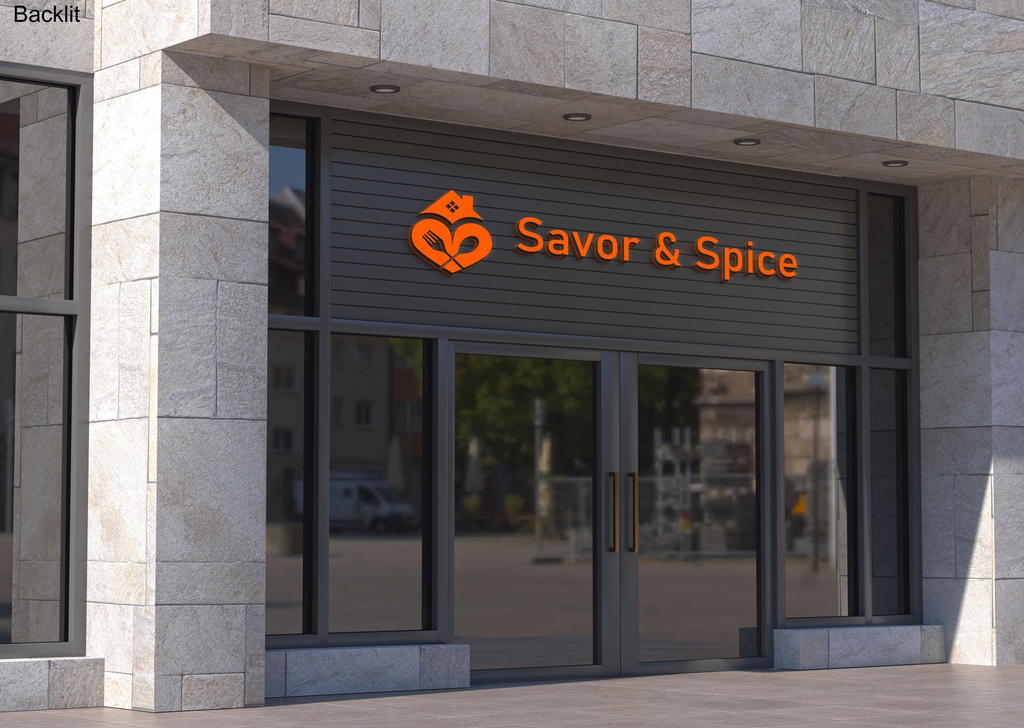
Step 1: Share your logo and requirements
Provide the business name, vector logo if available, preferred colors, approximate dimensions, installation address, and photographs of the proposed facade. Mention whether the sign will be illuminated and how customers approach the building.
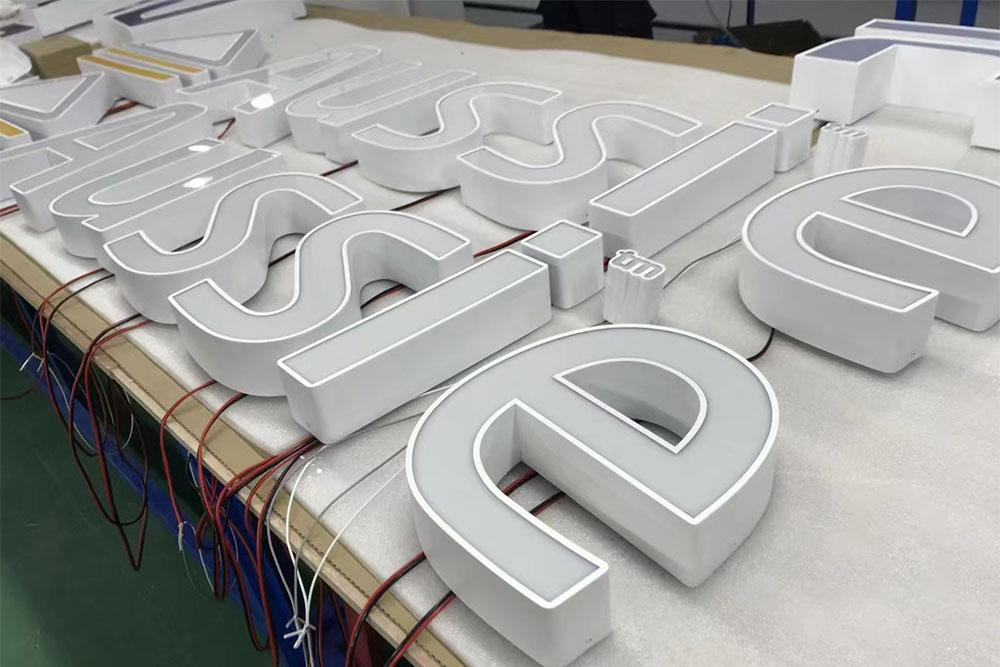
Step 2: Choose materials and lighting
Compare face-lit, halo-lit, combination-lit, and non-illuminated options. Confirm the letter depth, face material, finish, mounting system, and electrical specifications before accepting a quote.
Step 3: Review the design proof
Check spelling, logo proportions, spacing, colors, dimensions, and mounting details. Ask for a realistic preview on your building and, where possible, examples showing the lighting effect after dark.
Step 4: Confirm production and installation
Finalize the approved drawings, delivery arrangements, required permits, and installation responsibilities. Before the sign is accepted, inspect the finish, illumination, letter alignment, and supplied documentation.
A clear approval process is particularly useful when the customer, manufacturer, and installer are located in different countries. It creates a shared reference for the finished product and makes it easier to resolve questions before work proceeds.
What Determines the Cost of a Channel Letter Sign?
There is no single price that applies to every project. Two signs displaying the same business name may have different costs because their dimensions, construction, lighting, finishes, and installation conditions are not identical.
The main pricing factors include:
- Letter height and quantity: Larger characters and longer business names generally require more materials and fabrication time.
- Letter depth and shape: Complex typography, intricate logos, and unusual contours can increase production work.
- Material selection: Acrylic faces, metal finishes, specialty coatings, and decorative effects affect the overall specification.
- Illumination: LED quantity, lighting arrangement, power supplies, and electrical components contribute to the price.
- Mounting requirements: Direct mounting, raceways, backboards, and difficult facade access involve different installation needs.
- Shipping and installation: International freight, customs charges, lifting equipment, local labor, and permits can add to the project budget.
To compare quotes fairly, ask each supplier to identify what is included and excluded. Check whether the price covers the power supply, mounting hardware, design proof, packaging, freight, warranty, and installation.
A lower manufacturing price may not represent a lower total project cost if it excludes essential components or requires expensive modifications on arrival.
Common Mistakes to Avoid Before Purchasing
Even a high-quality sign can disappoint if the design and installation details are overlooked. These are some of the most common issues worth addressing early.
Choosing a design that is difficult to read: Decorative fonts, narrow letter strokes, and excessive detail can reduce readability from a distance. Test the lettering at the expected viewing distance before approval.
Ignoring the building background: A dark letter face on a dark facade may lose contrast. Likewise, a halo effect may be weak or uneven on an unsuitable surface. Review the actual wall material and color.
Using the wrong illumination: Excessively bright lighting can distract customers or conflict with local requirements. Choose brightness and color for the setting rather than selecting the strongest available option.
Overlooking permits and property rules: Shopping centers, commercial landlords, and local authorities may restrict dimensions, lighting, placement, or mounting methods. Verify requirements before fabrication.
Failing to plan maintenance: LED modules and power supplies may eventually need servicing. Make sure the design provides appropriate access to components and that replacement parts can be sourced.
Approving artwork without checking dimensions: A logo can look correct on a computer screen but become cramped when fabricated at the intended size. Review full-scale layouts, letter spacing, mounting points, and secondary text.
Frequently Asked Questions
1. What are custom channel letter signs used for?
Custom channel letter signs are used to display business names, logos, and branding on commercial buildings. They are common at restaurants, retail stores, offices, medical practices, hotels, and shopping centers. Depending on the design, individual letters can feature internal LED illumination, decorative metal finishes, or non-illuminated dimensional construction. The best option depends on visibility requirements, the building facade, and the brand’s preferred appearance.
2. Are LED channel letters suitable for outdoor use?
Yes, appropriately specified and installed LED channel letters can be used outdoors. Their durability depends on the quality of the materials, electrical components, weather protection, mounting, and maintenance. Ask the manufacturer about outdoor suitability, applicable product ratings, and warranty coverage. In exposed or coastal locations, discuss corrosion resistance and moisture protection before approving the design.
3. What is the difference between front-lit and halo-lit letters?
Front-lit letters allow light to shine through a translucent face, making the characters themselves glow. Halo-lit letters direct light toward the wall behind them, creating a soft outline around each character. Front lighting often prioritizes visibility, while halo lighting creates a more understated appearance. Combination-lit designs use both effects when the brand requires greater visual impact.
4. How do I choose the right letter size for my storefront?
Start with the distance from which customers need to read the sign, the available facade width, the height of the mounting position, and any local size restrictions. Use a design mock-up to assess legibility and spacing before production. Consider how trees, parked vehicles, neighboring signs, and street lighting may affect visibility. A sign professional can help prepare suitable dimensions.
5. Can I order channel letter signage for a business in Australia?
Yes, businesses can explore locally manufactured or internationally sourced signage for Australian projects. Before placing an order, confirm shipping arrangements, installation responsibilities, electrical compatibility, and the applicable local approval requirements. Ask the supplier for detailed drawings and specifications that a local installer can review. This helps reduce delays caused by missing documentation or installation changes.
6. Are custom channel letter signs energy efficient?
LED illumination generally uses less electricity than many traditional lighting technologies, although actual consumption depends on the sign’s size, LED specification, brightness, and operating hours. Ask the manufacturer for estimated power consumption and suitable power-supply details. A properly designed LED system can provide effective visibility without requiring unnecessarily high brightness.
7. What should I check before approving a sign quote?
Confirm the overall dimensions, letter depth, materials, face and return finishes, lighting type, mounting method, and final artwork. Check the price for design revisions, electrical components, packaging, shipping, taxes, installation, and permits. Review the warranty and ask who handles damage during delivery. A detailed written quotation makes it easier to compare suppliers and understand the full project cost.
Getting the Best Results From Custom Channel Letter Signs
Choosing the right signage means balancing visual appeal, readability, material quality, and practical installation requirements. A successful design should reflect the business’s identity while remaining suitable for its building and intended audience.
Before placing an order, review the artwork, compare materials, choose the appropriate illumination, and confirm local regulations. For Australian projects and businesses in other international markets, pay particular attention to shipping, electrical compatibility, and installation planning.
At Antique Signage, a thoughtful approach to dimensional lettering can help businesses create a storefront that looks professional and supports consistent branding. The best sign is not necessarily the biggest or brightest; it is the one that communicates the brand clearly, fits its surroundings, and delivers lasting value.
Whether you are planning a new storefront or upgrading an existing commercial property, investing time in the design and specification of your sign can make the entire project more effective.