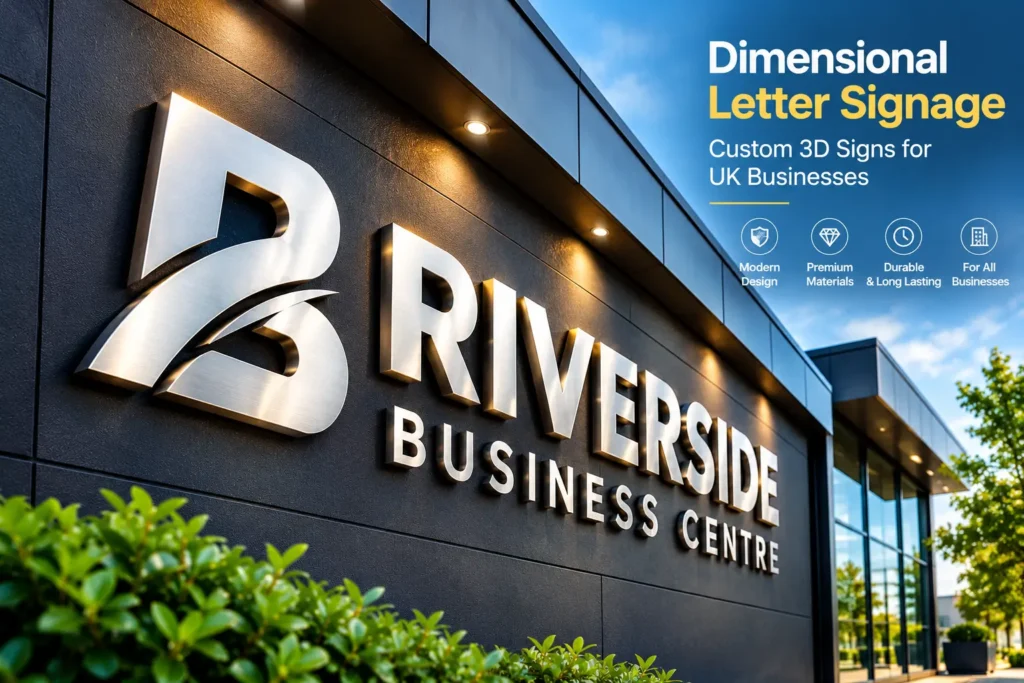
A professionally designed business sign does more than display a company name. It helps customers recognize a brand, creates a strong first impression, and gives a commercial property a more polished appearance. Dimensional letter signage is a popular choice for businesses looking to add depth, character, and professional branding to storefronts, office buildings, reception areas, and retail interiors.
From independent shops in London to restaurants in Manchester and corporate offices in Birmingham, three-dimensional lettering offers a versatile way to present a business identity. With options including aluminium, stainless steel, acrylic, and PVC, businesses can choose materials and finishes that complement their architecture and branding requirements.
Dimensional letter signage At Antique Signage & Advertising, custom signage begins with understanding the brand, the installation environment, and the appearance the customer wants to achieve. Careful planning helps create lettering that looks attractive, remains readable, and suits its intended location.
This guide explores the different types of dimensional letters, available materials, mounting methods, design considerations, and practical steps involved in planning signage for UK businesses and international commercial projects.
What Is Dimensional Letter Signage?
Dimensional letter signage consists of individual letters, numbers, symbols, or logos manufactured with physical depth rather than printed onto a flat surface. Each character is designed as a separate component and mounted onto a wall, building facade, sign panel, or another suitable surface.
The thickness creates natural shadows and highlights, giving the lettering a more substantial appearance than conventional flat graphics. Depending on the material and finish, the result can look contemporary, understated, luxurious, or industrial.
These signs can be installed indoors or outdoors. Businesses frequently use them for shopfront identification, office reception walls, hotel entrances, restaurant branding, and commercial building signage.
Unlike illuminated channel letters, traditional dimensional letters do not necessarily contain internal lighting. Their visibility comes from their size, colour contrast, placement, available ambient light, and the shadows created by their raised construction. External lighting can also be added when greater visibility is needed after dark.
The design can be customised to match a company’s logo, typography, brand colours, and architectural style. This makes dimensional lettering suitable for both small businesses and larger organisations maintaining consistent branding across multiple locations.
Why Businesses Invest in Three-Dimensional Lettering
Dimensional letter signage right signage can improve how customers perceive a business before they enter the premises. Raised letters provide a combination of visual impact and practical flexibility that suits many commercial environments.
1. A More Professional Brand Appearance
Three-dimensional letters give business names and logos a defined, architectural appearance. The added depth helps distinguish the lettering from the surrounding wall, making the sign look more considered and substantial.
For professional services, retail brands, hospitality businesses, and corporate offices, this can help create a consistent visual identity.
2. Improved Readability and Recognition
Individual letters can be spaced and sized to suit the viewing distance. Appropriate contrast between the lettering and its background helps customers identify the business more easily.
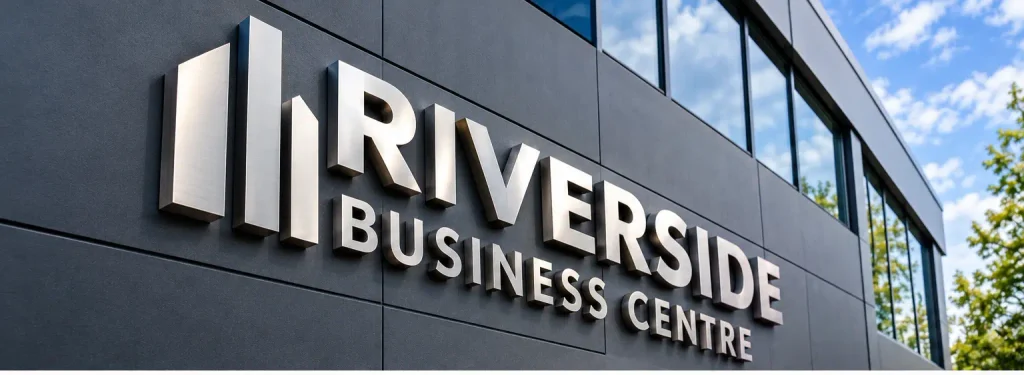
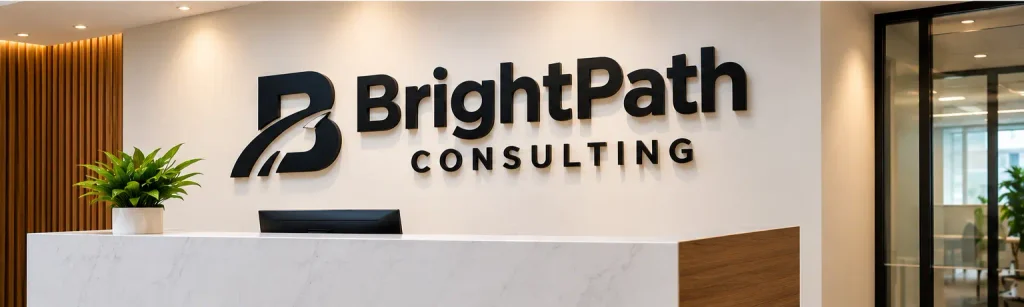
For example, brushed metal letters on a dark exterior wall may create a clear contrast, while black acrylic lettering on a light reception wall can produce a clean, contemporary look.
The best results come from selecting readable fonts, suitable letter heights, and an uncluttered layout.
3. Flexible Design Possibilities
Dimensional lettering can be manufactured in different sizes, thicknesses, colours, and finishes. Businesses can choose understated lettering for a minimalist interior or larger, more prominent characters for a commercial facade.
Logos, symbols, and individual design elements can also be produced to complement the main lettering.
4. Suitable for Different Commercial Environments
Dimensional signs can work across a wide range of industries, including:
- Retail shops and shopping centres
- Restaurants, cafés, and hotels
- Corporate offices and reception areas
- Medical clinics and dental practices
- Gyms, beauty salons, and wellness studios
- Educational institutions and professional services
- Warehouses and commercial facilities
The material, mounting method, and finish should be selected according to the specific environment rather than using the same specification for every project.
5. Long-Term Branding Potential
Well-made letters can remain part of a business’s visual identity for years when the materials, installation, and maintenance are appropriate for the location.
Individual letters may also be easier to update than a complete sign structure when a business changes its name, branding, or colour scheme. However, replacement work can still require new mounting arrangements, surface repairs, or updated permissions.
Popular Materials for Dimensional Letters
Material selection influences the appearance, weight, cost, fabrication process, and maintenance requirements of a sign. The right option depends on the desired finish and whether the lettering will be installed indoors or exposed to outdoor conditions.
Aluminium Dimensional Letters
Aluminium is widely used for commercial lettering because it is relatively lightweight and can be fabricated into precise shapes. It can be painted or finished to complement a brand’s colours and architectural surroundings.
It is suitable for many shopfronts, office exteriors, commercial buildings, and interior feature walls. Appropriate coatings and mounting hardware should be selected for the installation environment.
Stainless Steel Letters
Stainless steel is often selected for projects that require a premium metallic appearance. Brushed finishes create a subtle, refined look, while polished finishes produce stronger reflections.
These letters can suit hotels, corporate headquarters, luxury retail spaces, and reception areas. The grade of steel, finish, cleaning requirements, and exposure to moisture or coastal conditions should be considered before specifying the material.
Acrylic Letters
Acrylic offers flexibility in colour, thickness, and surface appearance. Its smooth finish makes it suitable for modern branding, interior walls, reception signage, and selected exterior applications.
Solid-colour acrylic letters can create a clean visual effect, while translucent acrylic can be used in designs involving external illumination. The grade and thickness should be appropriate for the intended use.
PVC Letters
PVC is a lightweight option for applications where affordability and ease of handling are priorities. It can be cut into different letter shapes and finished in a range of colours.
It is often useful for indoor branding, exhibition displays, reception areas, and other selected applications. Outdoor suitability depends on the particular material specification, thickness, finish, and exposure conditions.
Choosing the Right Material
| Material | Main advantage | Suitable applications |
|---|---|---|
| Aluminium | Lightweight and versatile | Shopfronts and exterior branding |
| Stainless steel | Premium metallic appearance | Hotels, offices, luxury retail |
| Acrylic | Colour and finish flexibility | Reception walls and retail interiors |
| PVC | Lightweight and economical | Indoor signs and selected commercial uses |
A reliable specification should consider the complete installation rather than the material alone. Fixings, surface preparation, letter depth, protective finishes, and local environmental conditions all influence the finished result.
Design Options That Shape the Final Appearance
A successful sign depends on more than the material used to manufacture it. Letter proportions, typography, colour, spacing, and mounting details determine how well the finished design represents the business.
Letter Size and Thickness
The dimensions should be appropriate for the available wall space and the distance from which the sign will be viewed. Larger lettering can be useful on building facades, while smaller characters may be more suitable for reception areas and interior feature walls.
Letter thickness also affects the amount of shadow and visual depth. A shallow profile can create a subtle appearance, while deeper letters produce a more prominent three-dimensional effect.
Font and Typography
The font should match the character of the brand while remaining easy to read. Simple sans-serif fonts often suit contemporary offices and technology businesses, whereas carefully selected serif lettering can complement traditional or premium brands.
Highly decorative fonts may look attractive in a design proof but become difficult to read when viewed from a distance. Always review the complete sign at approximately its intended viewing scale.
Colours and Finishes
The lettering should contrast sufficiently with the mounting surface. A finish that looks impressive on a computer screen may appear different under daylight, artificial lighting, or surrounding reflections.
Popular options include:
- Brushed silver and stainless steel
- Polished metallic finishes
- Matte black and white
- Painted corporate colours
- Gold-toned decorative finishes
- Coloured acrylic surfaces
Whenever possible, review a material sample or realistic design proof before approving production.
Common Mounting Methods for Dimensional Letters
The mounting arrangement affects the sign’s appearance, stability, and installation requirements. The correct method depends on the letter design, material, weight, and condition of the supporting surface.
Flush-Mounted Letters
Flush-mounted letters sit close to the wall, producing a clean and relatively understated appearance. This approach works well for interior branding, reception walls, and many commercial applications where a simple finish is preferred.
Stud-Mounted Letters
Stud mounting uses pins or threaded fixings attached to the backs of the letters. These fit into corresponding holes in the mounting surface and can provide a secure attachment when correctly specified.
The installer must check the substrate, fixing depth, letter weight, and any concealed services before drilling.
Stand-Off Mounted Letters
Stand-off mounting positions the letters slightly away from the wall. The resulting gap creates stronger shadows and gives the lettering additional visual depth.
This method can suit corporate reception areas, hotels, feature walls, and selected exterior installations. The distance from the wall should be consistent and appropriate for the design.
The mounting system should always be selected for the actual wall material and installation conditions. Heavy letters or exterior installations may require specialist fixings and professional installation.
How Dimensional Letter Signs Are Designed and Manufactured
A well-organised signage project follows a clear process, from the initial concept to the final inspection. Each stage helps ensure the finished letters match the approved design and suit the intended location.
Step 1: Initial Requirements and Site Assessment
The project begins with the business name, logo artwork, preferred colours, dimensions, and installation location.
Photographs and accurate measurements help the design team understand the available space. For exterior signage, the assessment should also consider the building surface, exposure to weather, access requirements, and local restrictions.
Step 2: Artwork and Design Approval
The lettering layout is prepared using the approved brand assets. Letter spacing, font proportions, thickness, finish, and mounting positions should be reviewed before manufacturing starts.
A design proof helps the customer understand how the sign will look in its intended setting. Any corrections should be agreed upon before production.
Step 3: Material Selection and Fabrication
Once the design is approved, suitable materials are selected and the letters are cut, formed, shaped, or machined according to the chosen specification.
The production method depends on the material and design. Some letters require formed metal returns, while others may be cut from acrylic, PVC, or sheet metal.
Step 4: Finishing and Quality Inspection
The letters are cleaned, finished, and checked for dimensional accuracy, edge quality, colour consistency, and visible defects.
The team should also confirm the mounting positions and verify that the finished lettering matches the approved artwork. For large or complex projects, a documented inspection can help keep production and installation aligned.
Step 5: Delivery and Installation
The completed sign is packaged to protect its edges and finishes during transport. The installer then checks the layout, prepares the mounting surface, and secures the letters using the specified hardware.
For international projects, delivery planning should account for packaging dimensions, transport costs, customs procedures, and local installation arrangements.
Dimensional Letter Signage for UK and International Businesses
Businesses across the United Kingdom use dimensional lettering for retail storefronts, office buildings, hospitality venues, and interior branding. However, a design that works in one location may require adjustments for another building or market.
For UK installations, planning should account for the property’s location, local authority requirements, building restrictions, and any landlord or shopping-centre conditions. Some exterior signs require advertisement consent, and requirements vary according to the property and location.
Weather exposure also matters. Rain, wind, coastal air, and changes in temperature can influence the choice of material, finish, and mounting hardware. Signs on listed buildings or within conservation areas may face additional restrictions.
For projects in the United States, Canada, Australia, or other international markets, local sign regulations and installation standards should be checked separately. A product specification or certification accepted in one market does not automatically establish compliance elsewhere.
Before placing an order, confirm:
- The permitted sign dimensions and location
- The suitability of the wall or building facade
- The required materials and protective finishes
- The mounting and installation arrangements
- Whether electrical or illumination requirements apply
- Delivery costs, customs charges, and installation responsibilities
Planning these details early can reduce delays and help avoid changes after manufacturing has begun.
What Affects the Cost of Dimensional Letters?
The cost of a custom sign depends on its size, construction, materials, finish, and installation requirements. There is no single price that suits every project.
The main factors include:
- Letter dimensions: Larger letters generally require more material and may need stronger mounting arrangements.
- Number of characters: Longer business names and complex logos can increase cutting, finishing, and assembly time.
- Material choice: Stainless steel, aluminium, acrylic, and PVC have different material and fabrication costs.
- Letter thickness: Deeper letters may require additional components and more complex manufacturing.
- Surface finish: Special colours, polished metals, and decorative finishes can affect the price.
- Installation conditions: Building height, access equipment, wall construction, and labour can influence the overall budget.
- Delivery arrangements: Packaging, transport, customs, and local handling may add costs to international projects.
When comparing quotations, check that each supplier has priced the same dimensions, materials, finish, mounting method, delivery arrangements, and installation scope.
A lower quotation is not necessarily the better choice if it excludes essential fixings, appropriate materials, or professional installation.
Maintenance Tips for Long-Lasting Signage
Regular maintenance helps keep dimensional letters looking presentable and makes it easier to identify potential problems before they become more expensive to resolve.
For most signs, a practical maintenance routine includes:
- Inspect the lettering: Look for loose fixings, damaged edges, corrosion, or signs that individual letters have moved.
- Clean suitable surfaces: Use cleaning products appropriate for the material and its finish. Avoid abrasive products that could scratch acrylic or polished metal.
- Check the mounting area: Look for cracks, water penetration, or deterioration around exterior fixings.
- Address damage promptly: Repair loose letters or damaged finishes before the condition worsens.
- Follow material-specific guidance: Stainless steel, painted aluminium, acrylic, and PVC may require different cleaning methods.
Exterior signs should be inspected according to their exposure and installation conditions. Large or elevated signs should be checked by appropriately qualified professionals rather than accessed without suitable equipment.
Frequently Asked Questions
1. What is dimensional letter signage used for?
Dimensional letter signage is used to display business names, logos, and other branding as raised three-dimensional characters. It is suitable for shopfronts, commercial buildings, reception areas, hotels, restaurants, and retail interiors. Businesses can customise the lettering’s dimensions, materials, colours, and mounting method to suit their brand identity and the installation environment.
2. Which materials are best for dimensional letters?
Aluminium and stainless steel are popular for their metallic appearance and suitability for many commercial applications. Acrylic provides flexibility in colour and finish, while PVC offers a lightweight option for selected projects. The best material depends on the sign’s location, desired appearance, budget, exposure to weather, and mounting requirements. A supplier should recommend a specification suitable for the actual installation.
3. Can dimensional letters be used outdoors in the UK?
Yes, dimensional letters can be used outdoors in the UK when the material, finish, and fixings are appropriate for the location. Rain, wind, coastal exposure, and the supporting building surface should be considered during planning. Businesses should also check whether advertisement consent, landlord approval, or other permissions are required before arranging fabrication and installation.
4. Are dimensional letters illuminated?
Traditional dimensional letters are usually non-illuminated, relying on their depth, colour contrast, and available lighting for visibility. External lighting can be added when appropriate. If a business requires light to shine through the letter faces or create a glow behind the characters, illuminated channel letters or a suitable halo-lit design may be a better option.
5. How are three-dimensional letters attached to a wall?
Depending on the design and substrate, letters can be flush-mounted, secured with concealed studs, or positioned using stand-off fixings. The installation method must account for letter weight, wall construction, exposure, and the required appearance. Correct measurements and a suitable fixing specification help maintain consistent spacing and reduce the risk of letters becoming loose.
6. How much do custom dimensional letters cost?
Pricing depends on the letter size, number of characters, material, thickness, finish, mounting method, and installation requirements. Delivery and customs charges can also affect international projects. To receive a useful quotation, provide the logo or artwork, approximate dimensions, installation location, preferred material, and photographs of the proposed mounting surface. Compare quotations using the same project specifications.
7. Do businesses need permission to install exterior dimensional letters in the UK?
Permission requirements depend on the sign’s location, size, design, building type, and local planning rules. Some signs can be installed without a separate advertisement consent application, while others require approval. Listed buildings, conservation areas, and properties with landlord restrictions may have additional conditions. Check with the relevant local planning authority and property owner before proceeding.
Final Thoughts
Well-designed raised lettering can give a business a more distinctive identity, improve the appearance of a building, and create a professional impression for customers. Material selection, typography, mounting methods, and installation planning all contribute to the quality of the finished sign.
For companies planning new storefront branding, reception signage, or commercial building identification, dimensional letter signage provides flexible options that can be adapted to different industries, architectural styles, and budgets.
Antique Signage & Advertising can use your business artwork, preferred materials, dimensions, and installation requirements as the starting point for a tailored signage concept. Review the design carefully, confirm local requirements, and compare quotations before approving production.
The best sign is one that represents your brand clearly, complements its surroundings, and remains suitable for its intended use over time.