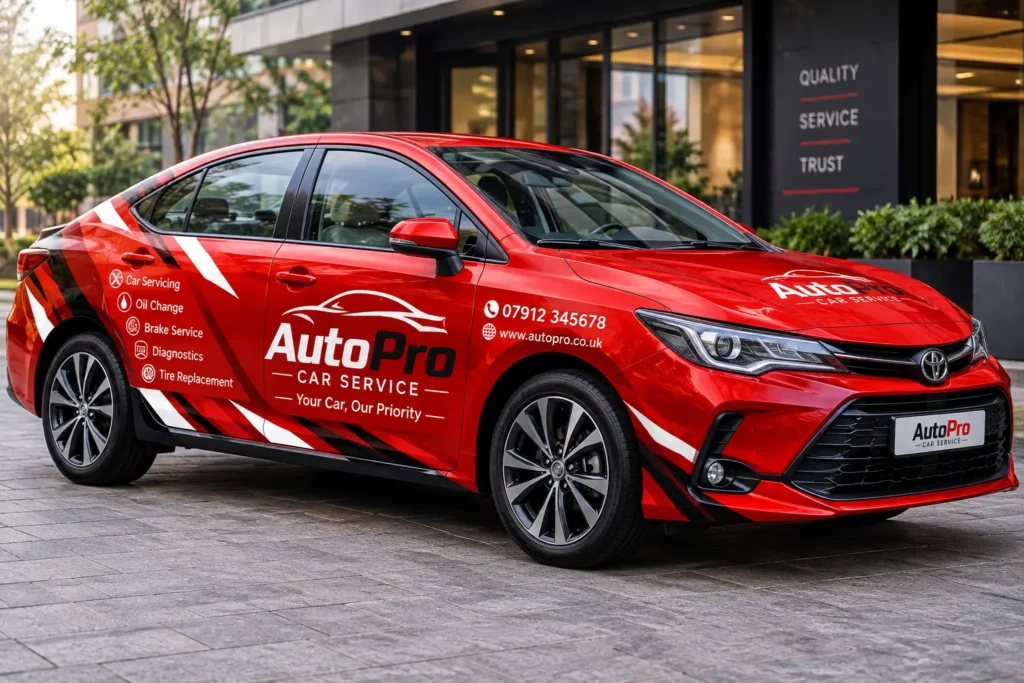
Your business vehicle is more than a way to travel between jobs. It can introduce your brand to potential customers, promote your services in local areas, and create a professional impression wherever it goes. A well-designed van, car, or truck can attract attention in busy streets, outside customer properties, and even while parked.
Vehicle signage turns an ordinary vehicle into a moving advertisement. From simple company lettering to eye-catching full wraps, businesses can choose a style that matches their identity, budget, and marketing goals.
But an effective design requires more than placing a logo on a door. The right materials, colours, layout, installation, and maintenance all contribute to the final result. This guide explores the different types of vehicle graphics, how to choose the right design, what affects pricing, and how businesses can get lasting value from their investment.
Why Branded Vehicles Can Be a Valuable Marketing Tool
Traditional advertising often depends on a specific location or platform. A branded business vehicle offers something different: it travels with your team and can reach people in multiple locations throughout the day.
Consider a plumbing company visiting residential properties, a delivery van travelling through commercial districts, or a construction business arriving at a new project. Each journey creates another opportunity for someone to notice the company name and remember its services.
Repeated exposure can gradually build familiarity. When potential customers later need a particular service, they may recognise a business they have already seen on the road.
Here are some practical benefits:
- Greater local visibility: Your brand can reach people in the areas where your business operates.
- Professional presentation: Consistent graphics make company vehicles look organised and established.
- Brand recognition: Repeated exposure helps people become familiar with your logo, colours, and name.
- Service promotion: Clear messaging tells potential customers what your company offers.
- Fleet consistency: Matching graphics make it easier to identify vehicles belonging to the same business.
- Long-term advertising value: Quality graphics can continue promoting your company throughout their useful life.
The results depend on factors such as vehicle usage, location, design quality, and audience. However, for businesses that travel regularly, vehicle branding can complement a wider marketing strategy.
Popular Types of Vehicle Signage for Different Businesses
Not every company needs a complete vehicle transformation. A small contractor may only need a logo and telephone number, while a delivery company might prefer bold graphics covering most of its van.
Understanding the available options makes it easier to choose a suitable solution.
1. Vinyl Lettering for Simple Business Branding
Vinyl lettering uses individually cut letters, numbers, and shapes made from adhesive vinyl. These elements are applied directly to suitable vehicle panels.
It is a practical option for businesses that want to display essential information without changing the appearance of the entire vehicle.
Common applications include:
- Company names and logos
- Telephone numbers
- Website addresses
- Short service descriptions
- Business slogans
- Fleet identification numbers
For example, an electrician could display the company name, a short description such as “Electrical Services”, and a contact number on both front doors.
The main advantage is simplicity. Vinyl lettering allows the original vehicle colour to remain visible while providing clear business identification.
2. Partial Wraps for More Noticeable Branding
A partial wrap covers selected sections of a vehicle rather than the entire exterior. It might include the side panels, rear doors, bonnet, or a combination of these areas.
This option provides more design freedom than basic lettering. Businesses can combine brand colours, larger logos, printed graphics, and promotional messages to create a stronger visual identity.
Partial wraps are particularly useful when a company wants a distinctive appearance but does not require full coverage. The final layout should be designed around the vehicle’s shape so that important information remains visible.
3. Full Vehicle Wraps for Maximum Visual Impact
A full wrap uses specialist vinyl to cover most of the vehicle’s painted exterior. It can transform a plain van, car, or truck into a highly recognisable branded vehicle.
Businesses often choose full wraps when they want:
- Large promotional graphics
- Strong and consistent brand colours
- Detailed designs and illustrations
- A recognisable fleet appearance
- Greater creative freedom
A full wrap offers plenty of space for branding, but the design must be carefully planned. Door handles, panel gaps, mirrors, curves, windows, and other features can affect how the finished graphics appear.
4. Perforated Window Graphics
Perforated window film contains small holes that allow light to pass through the material. It can display printed graphics on selected vehicle windows while maintaining some outward visibility from inside.
This option is commonly considered for rear windows of commercial vehicles. However, suitability depends on the window position, film specification, vehicle design, and local regulations.
Always check visibility requirements before applying any graphics to glass. A promotional design should never compromise driver safety.
5. Magnetic Signs for Removable Branding
Magnetic vehicle signs attach to suitable metal surfaces and can be removed when required. They may suit freelancers, contractors, or small business owners who use a personal vehicle for both work and private journeys.
They are convenient for occasional branding, but they require regular inspection. Dirt, moisture, unsuitable surfaces, and poor positioning can affect how securely they remain attached.
Magnetic signs should be removed and cleaned according to the supplier’s instructions to help prevent marks or trapped debris.
How to Design Vehicle Graphics That People Remember
A successful design communicates the business quickly. Most people will only see a moving vehicle for a few seconds, so the main message should be easy to understand without close inspection.
A design that looks attractive on a computer screen may not work equally well on the road. Viewing distance, vehicle shape, lighting, and movement all influence readability.
Make Your Business Name the Main Attraction
Your company name should be one of the most visible elements. Use a suitable typeface, clear spacing, and a strong contrast against the vehicle’s background.
If your logo contains thin lines or small details, ask your designer to prepare a version that remains recognisable at a distance. Complex artwork may need simplifying for large-scale application.
Use Colours That Match Your Brand
Your vehicle graphics should feel connected to your website, business cards, uniforms, and other marketing materials.
However, brand consistency does not mean every colour will work equally well on every vehicle. Contrast is essential.
Consider these practical guidelines:
- Dark lettering can work well on white or light-coloured vehicles.
- White or pale graphics often stand out against darker paintwork.
- Strong contrast generally improves readability.
- Too many competing colours can make a design look crowded.
- Printed colours should be checked against your brand guidelines before production.
Request a design preview before printing so you can review how the colours work on the actual vehicle.
Keep the Message Short and Useful
Avoid trying to list every service your company provides. Too much text can make a vehicle difficult to understand.
A cleaning business, for example, might display:
- Company name and logo
- Commercial and domestic cleaning
- Website or telephone number
This communicates the essential information without overwhelming the design.
Design Around the Vehicle’s Shape
Vehicles are not flat advertising boards. They have curved panels, opening doors, windows, handles, and other features that can interrupt a graphic.
A professional designer should use a template matching the vehicle’s make, model, and body configuration. This helps ensure that logos and important text are positioned correctly.
What Information Should You Include on a Branded Vehicle?
The best layout depends on your business type and marketing objectives. A service company may need a telephone number, while a delivery company may prioritise its name and logo.
Use this table as a starting point:
| Design element | Purpose | Priority |
|---|---|---|
| Company logo | Builds visual recognition | High |
| Business name | Identifies the company | High |
| Main service | Explains what you offer | High |
| Website | Directs people to your business | Medium |
| Phone number | Encourages direct enquiries | Medium |
| Social media | Provides another contact option | Optional |
| Short slogan | Communicates brand personality | Optional |
A short website address is easier to remember than a long URL. Similarly, a telephone number should be large enough to read from a reasonable distance.
Think about where people will see the vehicle. If it spends a lot of time in traffic, the rear doors may be particularly valuable for displaying a short message and contact details.
Choosing the Right Materials for Vehicle Graphics
Material quality affects appearance, flexibility, installation, and removal. Choosing vinyl based only on its initial price can lead to problems if the material is unsuitable for the vehicle’s shape or intended use.
Cast Vinyl
Cast vinyl is flexible and commonly used for premium vehicle wraps. It can conform to many curved and complex surfaces when applied by an experienced installer.
It is often selected for full wraps and detailed applications where a smooth finish is required.
Calendered Vinyl
Calendered vinyl is generally used for less demanding applications, including certain flat or gently curved surfaces.
It may be suitable for basic lettering and selected promotional graphics, depending on the product specification. It should not automatically be treated as a replacement for premium wrap film on complex vehicle shapes.
Protective Overlaminate
Printed graphics may require a compatible protective laminate. Depending on the vinyl system, this can help protect the printed surface against abrasion, cleaning, and everyday exposure.
Common finishes include:
- Gloss: Creates a bright, reflective appearance.
- Matte: Provides a more understated finish.
- Satin: Offers a balance between glossy and matte surfaces.
The correct combination should be selected according to the manufacturer’s recommendations.
What Determines the Cost of Vehicle Graphics?
There is no fixed price for every project. A small logo on two doors requires less material and installation time than a full wrap covering a large commercial van.
Several factors influence the final quotation.
Vehicle Size and Shape
A small car generally requires less material than a large van or truck. However, complex body shapes, deep recesses, curved panels, and difficult access areas can increase installation time.
Coverage Area
Basic lettering, partial graphics, and full wraps involve different quantities of vinyl and different levels of labour.
Material Quality
Premium films, specialist finishes, and printed graphics can affect the overall price. Ask the supplier which material brand and product range will be used.
Design Complexity
A simple logo and contact number are usually easier to prepare than a design containing multiple colours, photographs, gradients, and detailed illustrations.
Preparation and Installation
The vehicle may require cleaning, removal of existing graphics, or additional surface preparation. Damaged paint, corrosion, and unsuitable surfaces can also affect the work.
When comparing quotations, check whether the price includes design, printing, materials, installation, and removal of old graphics. A low initial quotation may not cover every part of the project.
The Professional Installation Process Explained
A quality finish depends on preparation as much as the vinyl itself. Even premium material can perform poorly if it is applied to a dirty surface or installed incorrectly.
A typical installation involves six stages.
Step 1: Vehicle inspection
The installer checks the vehicle’s paintwork, panels, condition, and intended graphic areas. Existing damage should be identified before work begins.
Step 2: Design approval
The customer reviews a vehicle-specific digital mock-up. Check the spelling, contact details, colours, logo proportions, and positioning before approving production.
Step 3: Surface preparation
The exterior is cleaned to remove dirt, grease, wax, and other contaminants. The surface must be suitable for the selected adhesive film.
Step 4: Printing and cutting
The approved artwork is produced using the selected vinyl system. Printed graphics may receive a protective laminate before installation.
Step 5: Application
The installer positions the material carefully, working around curves, edges, handles, and panel gaps. Correct application techniques help reduce bubbles, wrinkles, and lifting.
Step 6: Final inspection
The completed work is checked for alignment, adhesion, trapped air, and visible defects. The customer should also receive aftercare instructions.
Common Mistakes to Avoid When Branding a Business Vehicle
A poor design can waste a valuable advertising opportunity. Many problems can be prevented by reviewing the project carefully before production.
Adding too much information: Too many services, slogans, and contact details make the design difficult to read. Focus on what customers need to know first.
Using weak colour contrast: Similar colours can blend into the vehicle’s paintwork. Review the design at a distance before approving it.
Using low-resolution artwork: Blurry logos and photographs may look unprofessional when enlarged. Provide high-resolution files whenever possible.
Ignoring the rear of the vehicle: People often see commercial vehicles from behind in traffic. The rear doors can provide valuable space for a company name, website, or short service message.
Choosing unsuitable materials: Not every vinyl product is designed for every surface. Ask the installer to recommend a suitable system for your vehicle and intended application.
Skipping the final proof: Incorrect spelling, phone numbers, and website addresses can make the graphics less useful. Check every detail before printing.
How to Maintain Vehicle Graphics and Protect Their Appearance
Regular care helps preserve the appearance of vinyl lettering and wraps. Exact maintenance requirements depend on the material, so follow the manufacturer’s instructions.
A practical maintenance routine includes:
- Wash the vehicle using suitable cleaning products.
- Avoid abrasive brushes and harsh chemicals unless approved by the manufacturer.
- Keep high-pressure water away from vinyl edges and seams.
- Remove bird droppings, road salt, and other contaminants promptly.
- Check corners and edges regularly for signs of lifting.
- Contact the installer if you notice peeling, bubbling, or damage.
Hand washing is often a practical option for maintaining wraps. If you use an automated car wash, first check whether the vinyl manufacturer permits it.
Parking in a shaded or covered area when practical may also reduce unnecessary exposure to harsh environmental conditions.
Legal and Safety Checks Before Applying Vehicle Graphics
Before installing graphics, check the regulations that apply where the vehicle is registered and operated. Requirements can differ depending on the vehicle class, window position, material, and type of graphic.
Pay particular attention to:
- Driver visibility through required windows
- Reflective or illuminated materials
- Registration plates and mandatory vehicle markings
- Safety equipment and sensors
- Commercial vehicle identification requirements
- Restrictions that apply to specialist or regulated services
Do not assume a graphic is permitted simply because it fits physically on the vehicle. If your design includes window coverage, reflective material, or unusual lighting, confirm its suitability before installation.
How to Choose a Reliable Vehicle Graphics Company
The installer has a major influence on the finished result. A professional supplier should understand the materials, show examples of previous projects, and provide a clear quotation.
Before making a decision, consider the following:
- Previous projects: Review examples involving vehicles similar to yours.
- Material knowledge: Ask which vinyl products are suitable and why.
- Design support: Check whether the company provides a vehicle-specific mock-up.
- Installation experience: Ask about surface preparation and application methods.
- Warranty information: Confirm what is covered, the duration, and any exclusions.
- Aftercare guidance: Make sure you understand how to clean and maintain the graphics.
A reliable installer should explain the limitations of the material instead of promising that every wrap will last for a fixed number of years under all conditions.
Practical Ways to Get More Value from Your Vehicle Branding
The design and installation are only part of the process. A few additional decisions can make your investment more useful.
Maintain Consistent Branding Across Your Fleet
If your business operates several vehicles, use a common logo, colour palette, and typography. Different layouts can be adapted to individual vehicle shapes while keeping the overall brand recognisable.
Use Vehicle-Specific Design Previews
Review the graphics from both sides, the front, and the rear. A mock-up helps identify awkward spacing and areas where text could be hidden by handles or panel gaps.
Match Your Message to Your Customers
A local tradesperson may benefit from including a clear service area. A company operating across a wider region may prefer to display its website and telephone number instead.
Keep Your Vehicles Presentable
Clean vehicles and well-maintained graphics create a more professional impression. Damaged or peeling vinyl can make even a good design look neglected.
Connect Your Vehicle Branding with Your Online Presence
Use the same logo, colours, and business name across your website, social media accounts, and printed materials. This consistency makes it easier for customers to recognise your company when they encounter it through different channels.
Frequently Asked Questions About Vehicle Graphics
1. What is vehicle signage used for?
Vehicle signage displays business names, logos, contact details, and promotional graphics on cars, vans, trucks, and other vehicles. It helps companies build brand awareness while travelling between locations or visiting customers. Businesses can choose simple lettering, partial graphics, or full wraps depending on their budget and marketing requirements.
2. Which type of vehicle graphics is best for a small business?
Vinyl lettering or a partial wrap can suit a small business with a limited marketing budget. Lettering provides space for essential details, while partial graphics allow more prominent branding. The best option depends on the vehicle, the services offered, and the level of visibility the business wants to achieve.
3. How long do vehicle wraps normally last?
The lifespan varies according to vinyl quality, installation, exposure, vehicle use, and maintenance. Premium wrap films may last several years under suitable conditions, but there is no universal lifespan. Ask the supplier for the manufacturer’s product specifications, expected performance, warranty terms, and maintenance recommendations before purchasing.
4. Can vehicle graphics be removed without damaging the paint?
In many cases, professionally installed vinyl can be removed without damaging sound, original factory paint. However, the result depends on paint condition, material age, installation quality, and removal technique. Repainted or damaged surfaces may be more vulnerable. It is best to use an experienced installer and follow the vinyl manufacturer’s removal instructions.
5. Are vehicle graphics suitable for personal cars?
Yes. Personal cars can display business logos, small promotional messages, or removable magnetic signs. This can be useful for freelancers, tradespeople, and small business owners who use one vehicle for both personal and professional journeys. The design should remain appropriate for the vehicle’s appearance and comply with applicable local regulations.
6. What should I include in a vehicle graphics design?
Start with your business name, logo, and main service. Add a website or telephone number if space allows. Use readable lettering, clear contrast, and consistent brand colours. Avoid unnecessary text and small details that people cannot easily read from a distance. Review the complete design on a vehicle mock-up before approving production.
7. Does a full wrap protect the original vehicle paint?
A suitable wrap can provide a degree of protection against minor surface abrasion and everyday exposure on covered areas. However, it is not a guarantee against scratches, stone chips, accidents, or paint damage. The condition of the original paint and the quality of installation also matter. A wrap should not be treated as a replacement for proper vehicle care.
8. Is vehicle signage worth the investment?
It can be a valuable part of a business’s marketing strategy, particularly for companies that regularly travel within their service areas. The graphics create repeated opportunities for people to notice and recognise the brand. Results depend on vehicle usage, design quality, local visibility, and the business’s services, so it should be considered alongside other marketing activities.
Final Thoughts
A professionally branded vehicle can help a business look more established, communicate its services, and build recognition wherever it travels. The strongest results come from combining a clear message with suitable materials, thoughtful design, and skilled installation.
Choosing the right vehicle graphics means considering more than appearance. Think about your audience, vehicle shape, budget, maintenance requirements, and the message you want people to remember. With careful planning, vehicle signage can turn your business vehicle into a practical and recognisable part of your overall marketing strategy.
Add a stronger business enquiry call to actionShorten repetitive sections for easier reading