Finding signs can help people understand what is happening around them, identify potential problems, and make better decisions. Signs appear in everyday places, from roads and workplaces to public buildings, shopping areas, and natural environments. Some provide direct instructions, while others offer clues that require careful observation and interpretation.
Learning how to recognise different types of signs is useful for drivers, pedestrians, business owners, employees, students, and anyone who needs to understand their surroundings. The key is knowing what to look for, understanding the context, and avoiding assumptions based on a single visual clue.
This guide explores practical ways to identify signs, interpret their meaning, recognise common categories, and use reliable information when making decisions.
What Does Finding Signs Actually Mean?
The process of identifying signs involves noticing visual indicators, symbols, written messages, patterns, or physical features that communicate information. These indicators can be deliberately designed, such as road signs and warning boards, or naturally occurring, such as changes in the environment.
A sign usually communicates something without requiring a lengthy explanation. Its meaning may be obvious, or it may depend on the surrounding circumstances.
For example:
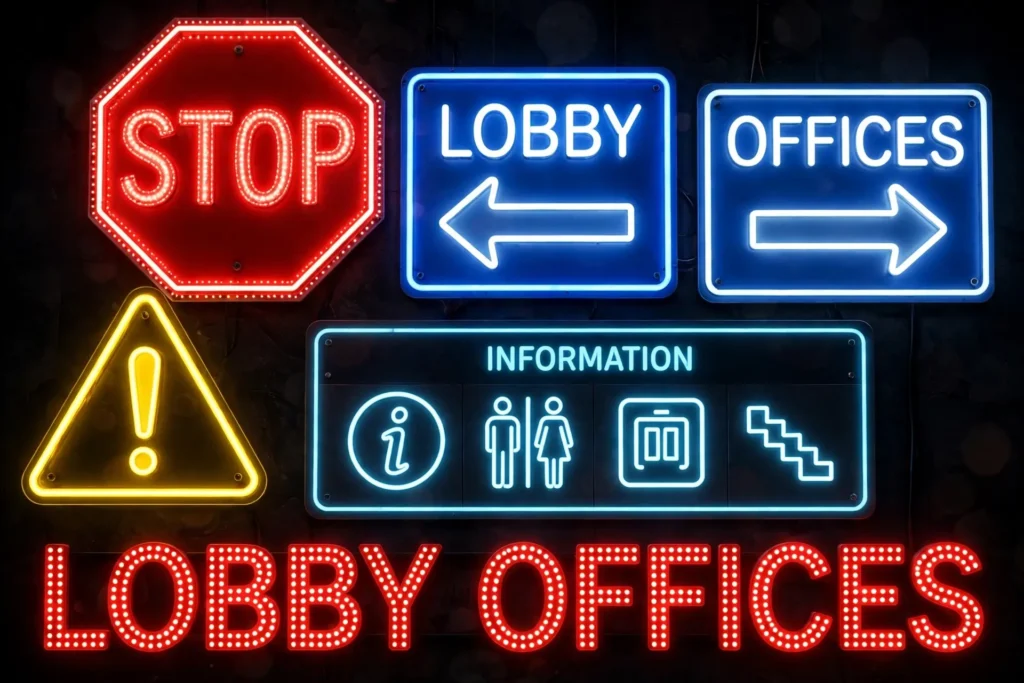
- A red circular road sign may communicate a restriction.
- A green directional board can help people locate a destination.
- A warning triangle may indicate a potential hazard.
- An illuminated exit sign identifies an emergency route.
- A business sign helps customers recognise a company or shop.
The same symbol can sometimes have different meanings depending on its location. That is why observation and context are both essential.
Why Recognising Signs Is an Important Everyday Skill
Signs are designed to make information easier to understand. Recognising them quickly can improve safety, navigation, communication, and decision-making.
Improving Personal Safety
Warning signs alert people to situations that may require additional care. Construction areas, electrical equipment, slippery floors, restricted zones, and hazardous materials often have specific warning symbols.
Recognising these indicators helps people avoid unnecessary risks. In workplaces, understanding safety signs is particularly important because employees may encounter machinery, chemicals, or areas with restricted access.
Making Navigation Easier
Directional signs reduce confusion in unfamiliar environments. Airports, hospitals, shopping centres, parking facilities, and public transport stations use signs to guide visitors.
Clear symbols and readable text help people identify entrances, exits, facilities, and important destinations without constantly asking for directions.
Understanding Business and Public Information
Commercial signs communicate essential information about businesses, services, opening hours, and available facilities.
A clearly displayed sign can help customers identify the correct premises and understand what a business offers. Public information boards also make services easier to access.
Recognising Changes in the Environment
Some signs indicate that something has changed. A damaged road sign, a newly installed warning board, or an unfamiliar symbol may suggest that an area has different conditions or requirements.
Paying attention to these details encourages people to respond appropriately.
Different Types of Signs and What They Communicate
Signs serve different purposes, so understanding their categories makes interpretation easier.
1. Regulatory Signs
Regulatory signs communicate rules that people are expected to follow. They are common on roads, in public spaces, and around private properties.
Examples include:
- Stop signs
- No-entry signs
- Speed-limit boards
- No-parking indicators
- Restricted-access signs
- Mandatory direction signs
These signs help maintain order and reduce confusion. Their colours, shapes, and symbols often follow recognised standards, making them easier to identify across different locations.
2. Warning Signs
Warning signs alert people to potential dangers. They are frequently displayed in industrial buildings, construction zones, warehouses, laboratories, and public facilities.
Common examples include electrical hazard warnings, slippery-floor symbols, falling-object warnings, and high-voltage indicators.
A warning sign does not always mean an accident is about to happen. Instead, it communicates that people should take extra care and follow appropriate safety procedures.
3. Directional and Wayfinding Signs

Directional signs help visitors move through unfamiliar spaces. They typically include arrows, location names, floor numbers, and simple symbols.
You can find them in:
- Hospitals and healthcare facilities
- Hotels and office buildings
- Airports and railway stations
- Shopping centres
- Educational institutions
- Large commercial properties
Effective wayfinding signage uses clear typography, consistent colours, and logical placement. Signs should appear before visitors reach a decision point rather than after they have already passed it.
4. Informational Signs
Informational signs provide details about a location, service, facility, or activity. They may explain opening hours, identify departments, display contact information, or communicate visitor instructions.
Unlike warning signs, their primary purpose is to help people understand available information.
Examples include reception boards, customer-service signs, public notices, and facility information panels.
5. Commercial and Business Signs

Commercial signs help businesses communicate their identity and attract attention. They can include company names, logos, product information, promotional messages, and directional details.
Popular options include:
- 3D channel letter signs
- Illuminated storefront signs
- Acrylic lettering
- Stainless steel signs
- Aluminium signboards
- LED displays
- Outdoor building signs
Material selection, lighting, visibility, and placement all influence how effectively a commercial sign performs.
For a business, a sign should do more than display a name. It should make the premises recognisable and provide customers with a clear visual introduction to the brand.
How to Identify Signs in an Unfamiliar Location
Recognising an unfamiliar sign becomes easier when you follow a consistent process instead of guessing its meaning.
Step 1: Observe the Shape and Colour
Many signs use standard visual features to communicate information quickly.
For instance, red is commonly associated with restrictions or stopping, yellow often indicates caution, and green is frequently used for guidance or safe directions.
However, colour alone is not enough to establish a sign’s meaning. Different countries and organisations may use different standards.
Step 2: Examine the Symbol
Symbols are often more useful than decorative elements because they communicate a specific message.
Look for familiar images such as arrows, pedestrians, vehicles, fire extinguishers, electrical bolts, or accessibility symbols.
If the symbol is unfamiliar, avoid making assumptions. Check the accompanying text or consult an official source.
Step 3: Read the Written Information
Words can clarify a symbol’s purpose. A sign may include instructions, restrictions, distances, time limits, or contact details.
Pay attention to smaller text as well as the main heading. Additional information can explain when a restriction applies or which people are affected.
Step 4: Consider the Surrounding Environment
Location provides valuable context.
A warning sign beside industrial machinery is likely to relate to equipment safety. A directional board inside a hospital may guide visitors towards departments. A commercial sign outside a retail property is generally intended to identify the business.
Consider what is happening around the sign before deciding what it communicates.
Step 5: Check Whether the Sign Is Current
A sign can become outdated because of renovations, road changes, business relocations, or updated regulations.
Look for damaged panels, faded text, missing symbols, or conflicting information. If a sign appears unreliable, confirm the information with an authorised person or official source.
Common Visual Features That Help People Recognise Signs
Several design elements make signs easier to identify and understand.
| Visual feature | Main purpose |
|---|---|
| Colour | Communicates categories or warnings |
| Shape | Helps identify the type of instruction |
| Symbols | Provides quick visual meaning |
| Typography | Makes written information readable |
| Arrows | Shows direction or movement |
| Lighting | Improves visibility in darker conditions |
| Contrast | Separates text and graphics from the background |
Colour and Contrast
Strong contrast improves readability, particularly when signs are viewed from a distance.
Dark lettering on a light background or light lettering on a dark background can make information easier to recognise. The correct combination depends on the environment and intended use.
Typography and Letter Size
Text should be large enough for the expected viewing distance. Decorative fonts may look attractive, but they can make important information harder to read.
Simple lettering, balanced spacing, and clear alignment usually produce better results.
Lighting and Visibility
Signs installed outdoors may need illumination to remain visible after sunset.
LED lighting, backlit panels, and halo-lit channel letters are common solutions for commercial environments. Lighting should improve visibility without creating excessive glare.
Digital Tools That Can Help Identify Unfamiliar Signs
Technology has made it easier to understand symbols and written messages that people encounter in unfamiliar locations.
Smartphone Camera and Image Search
A smartphone camera can capture a sign so that its symbol or wording can be examined more closely.
Visual search tools may help identify unfamiliar objects, symbols, and common warning indicators. However, automated results should be treated as guidance rather than official confirmation.
Translation Applications
Translation tools can help people understand signs written in another language.
They are particularly useful when travelling, visiting international airports, or working in multilingual environments.
For safety-critical information, confirm important instructions with a qualified translator or local authority.
Online Maps and Street Imagery
Digital mapping platforms can help identify road layouts, business locations, and public facilities.
Street imagery may also provide a visual reference for signs installed in particular locations. Keep in mind that images may not reflect recent changes.
Official Government and Safety Resources
Government transport departments, workplace safety organisations, and local authorities publish information about recognised signs and symbols.
These resources are generally more dependable than unverified social media posts or random image-search results.
Common Mistakes to Avoid When Interpreting Signs
Even familiar-looking signs can be misunderstood. Avoiding a few common mistakes can make identification more reliable.
Assuming Every Sign Has a Universal Meaning
Although many signs follow international conventions, local regulations can differ. A symbol that is familiar in one country may have a different application elsewhere.
Always consider the location and relevant local rules.
Ignoring Smaller Details
People often focus on the largest symbol or heading and overlook important conditions written underneath.
For example, a parking sign may include specific time restrictions, permit requirements, or exceptions.
Reading the complete message prevents unnecessary misunderstandings.
Relying Only on Colour
Colour can provide a useful clue, but it should never be the only factor used to identify a sign.
Consider the shape, symbol, written instructions, and surrounding environment together.
Trusting Damaged or Unofficial Signs
A faded, damaged, or privately installed sign may not provide reliable information.
When the message conflicts with official instructions, seek clarification from the responsible authority.
Using Technology Without Verification
Image recognition and translation applications can produce incorrect results, especially when photographs are unclear or symbols are unusual.
For important decisions, confirm the interpretation through a reliable source.
How Businesses Can Make Their Signs Easier to Recognise
Businesses also need to understand how people identify and interpret visual information. A well-designed sign can improve customer experience and strengthen brand recognition.
Choose a Clear and Recognisable Design
A commercial sign should communicate the business name or purpose without unnecessary visual clutter.
Logos, lettering, colours, and supporting information should work together. Customers should be able to recognise the main message quickly.
Select Suitable Materials
The right material depends on the installation location, design requirements, and expected exposure.
| Sign material | Common application |
|---|---|
| Acrylic | Modern lettering and illuminated displays |
| Stainless steel | Premium corporate and retail signage |
| Aluminium | Outdoor signboards and building signs |
| PVC | Indoor displays and lightweight applications |
| Aluminium composite panels | Commercial fascia and background panels |
Each material offers different advantages in appearance, weight, durability, and maintenance.
Consider Three-Dimensional Lettering
Three-dimensional lettering creates depth and gives storefronts a more distinctive appearance.
Channel letters can incorporate internal LED lighting, while halo-lit letters produce a soft glow behind the lettering.
These options are useful when a business wants its name to remain visible during evening hours.
Install Signs in Appropriate Locations
Even an attractive sign can perform poorly if it is hidden or difficult to see.
Consider pedestrian movement, vehicle visibility, building architecture, surrounding lighting, and possible obstructions before installation.
Maintain the Sign Regularly
Outdoor signs are exposed to sunlight, rain, dust, and changing temperatures.
Routine maintenance should include checking electrical components, cleaning surfaces, inspecting mounting points, and replacing damaged lighting.
A clean and well-maintained sign helps preserve a professional business appearance.
Practical Tips for Better Sign Recognition
A few simple habits can improve how quickly and accurately people understand signs.
- Look at the complete design: Examine the symbol, colour, text, and shape together.
- Check the location: Consider why the sign has been installed in that particular area.
- Read additional instructions: Small text may contain important conditions or exceptions.
- Compare with recognised examples: Official reference guides can help identify standard symbols.
- Avoid guessing: If the message is unclear, ask an appropriate authority.
- Pay attention to changes: New, damaged, or relocated signs may communicate updated information.
- Use technology carefully: Digital tools can support identification but should not replace official guidance.
These habits are useful in public spaces, commercial buildings, workplaces, and unfamiliar environments.
Frequently Asked Questions
1. What is the easiest way to recognise an unfamiliar sign?
Start by examining its shape, colour, symbol, and written message. Then consider where it is installed and what activity takes place nearby. If the meaning remains unclear, use an official reference guide or ask someone responsible for the location. Avoid relying on colour or a single symbol because context can change how a sign should be interpreted.
2. Why are different shapes used in road and safety signs?
Different shapes help people recognise information quickly, sometimes before they can read the wording. For example, stop signs use a distinctive shape, while triangular designs are commonly associated with warnings. Consistent visual conventions reduce confusion and make important messages easier to identify, particularly when drivers or pedestrians have limited time to respond.
3. Can a smartphone identify signs from a photograph?
Yes. Some visual search and image recognition applications can identify familiar signs and provide information about their symbols. Translation applications can also help interpret written messages. Results are not always accurate, especially when photographs are blurry or signs are unusual. Always verify safety-related instructions through an official source before acting on them.
4. What makes a business sign easy to recognise?
A recognisable business sign usually combines readable lettering, suitable colours, good contrast, a clear logo, and appropriate placement. Lighting can improve visibility after dark, while three-dimensional letters create depth and visual interest. The design should communicate the business identity without overcrowding the available space with unnecessary graphics or information.
5. How often should outdoor signs be inspected?
Outdoor signs should be inspected regularly, although the ideal schedule depends on their materials, installation conditions, and exposure to weather. Businesses should check for fading, loose fittings, damaged panels, electrical problems, and failed LEDs. Additional inspections after severe weather can help identify problems before they affect visibility or create a safety concern.
6. Are all warning signs the same in every country?
No. Many warning symbols follow widely recognised conventions, but national standards and local regulations can differ. The colours, wording, shapes, and legal requirements may not be identical everywhere. When travelling or working in another country, consult local transport or workplace safety guidance instead of assuming that every familiar-looking symbol has exactly the same meaning.
7. How can someone confirm the meaning of a sign?
The most dependable approach is to check an official source related to the sign’s purpose. Transport authorities provide information about road signs, while workplace safety organisations publish guidance on hazard symbols. For a sign inside a private building, the property manager or responsible organisation may provide clarification. This is especially important when the message involves safety or legal restrictions.
Final Thoughts
Recognising visual information is a practical skill that supports safer movement, better navigation, and clearer communication. Understanding shapes, symbols, colours, written instructions, and surrounding conditions makes it easier to interpret different messages accurately.
The most effective approach to finding signs is to combine careful observation with reliable information rather than depending on assumptions. From road warnings and workplace instructions to commercial signage and directional displays, every well-designed sign has a purpose. Learning to recognise that purpose helps people make more informed decisions in everyday situations.