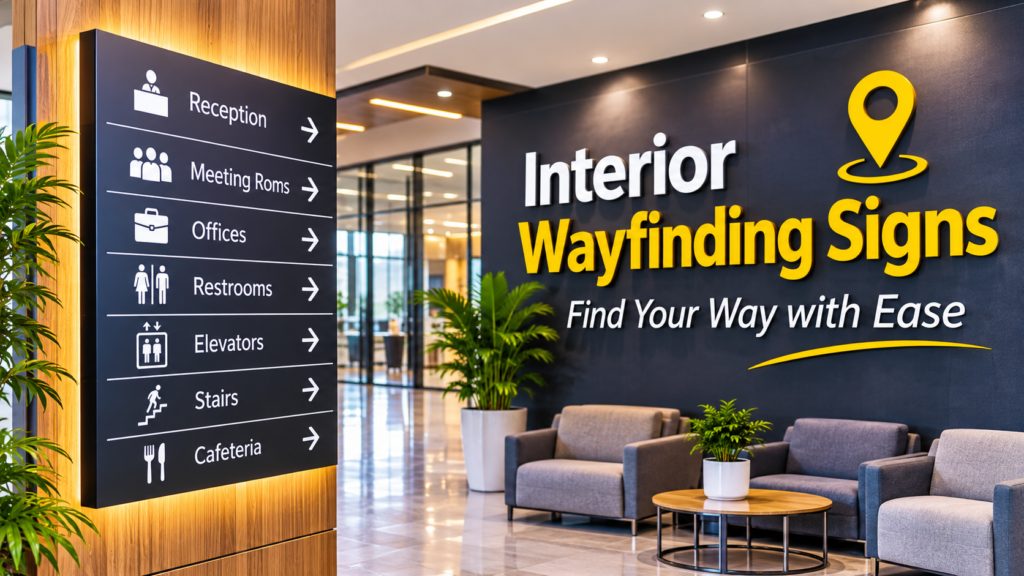
Finding the right room, department, office, or service area should never feel confusing. In large buildings, even a beautifully designed interior can become frustrating when visitors struggle to understand where they need to go. Clear signage solves this problem by guiding people through spaces with simple messages, recognizable symbols, and well-planned directions.
Interior wayfinding signs help businesses create organized, welcoming, and easy-to-navigate environments. From corporate offices and hospitals to shopping centres, hotels, educational institutions, and commercial buildings, these signs make it easier for employees, customers, and visitors to find their destinations without constantly asking for assistance.
A well-designed signage system does more than display room names or arrows. It improves the visitor experience, supports accessibility, strengthens brand identity, and makes an entire building feel more professional. Understanding the different types, materials, design principles, and placement strategies can help businesses develop an effective navigation system.
What Are Interior Wayfinding Signs?
Interior wayfinding signs are visual communication tools installed inside buildings to help people understand their surroundings and reach specific destinations. They provide directions, identify important locations, communicate information, and make unfamiliar environments easier to navigate.
Unlike decorative signs that primarily focus on appearance, wayfinding signage has a practical purpose. Every element should help visitors make the right decision at the right point in their journey.
A complete system may include:
- Directional signs with arrows pointing towards specific areas.
- Room identification signs displaying office numbers or department names.
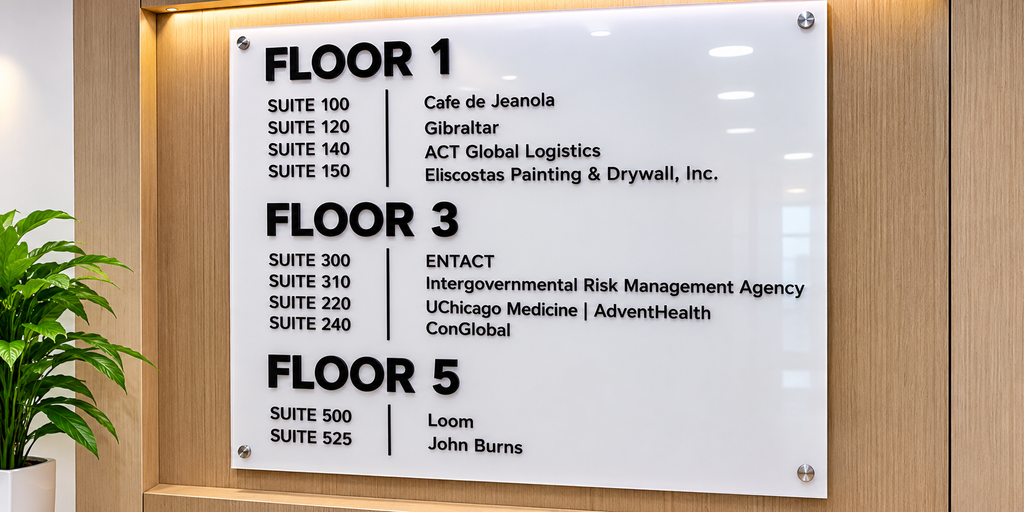
- Floor directory signs listing businesses, departments, or facilities.
- Informational signs explaining building rules and available services.
- Identification signs marking entrances, reception areas, and meeting rooms.
- Safety and accessibility signs communicating essential information.
For example, someone entering a corporate office for the first time should be able to locate reception, meeting rooms, elevators, and restrooms without needing personal assistance.
Why Businesses Need an Effective Interior Navigation System
A building’s layout can influence how people experience a business. Poor navigation creates unnecessary frustration, while clear visual guidance makes visitors feel comfortable and confident.
Here are several reasons businesses should invest in professionally designed signage.
1. Makes Visitors Feel More Comfortable
First-time visitors may not understand a building’s layout. Without clear directions, they might walk into restricted areas, take the wrong hallway, or repeatedly ask employees for help.
Strategically positioned signs provide useful information before visitors become confused. This creates a smoother experience from the entrance to the final destination.
2. Improves Daily Workplace Efficiency
Employees also benefit from a well-organized navigation system. In larger workplaces, clear identification helps staff locate departments, conference rooms, storage areas, and shared facilities.
It is particularly useful for:
- New employees joining an organization.
- Delivery personnel visiting different departments.
- Customers attending scheduled appointments.
- Maintenance teams working across multiple floors.
- Guests attending meetings or corporate events.
When people can navigate independently, employees spend less time providing basic directions.
3. Creates a Professional Business Environment
Signage contributes to the overall appearance of an interior. Consistent typography, attractive materials, coordinated colours, and clean finishes can make an ordinary building look more organized.
For businesses that welcome clients and partners, these details help establish a positive first impression.
4. Supports Accessibility and Inclusive Design
Good navigation should work for people with different needs. Readable typography, appropriate colour contrast, recognizable symbols, and accessible sign placement make buildings easier to use.
Depending on the building and applicable regulations, businesses may also need tactile lettering, Braille, accessible restroom identification, and other accessibility features.
Popular Types of Interior Wayfinding Signs
Different environments require different signage solutions. A hospital, for example, needs clear department directions, while a corporate office may prioritize meeting rooms, reception, and employee departments.
Directional Signage
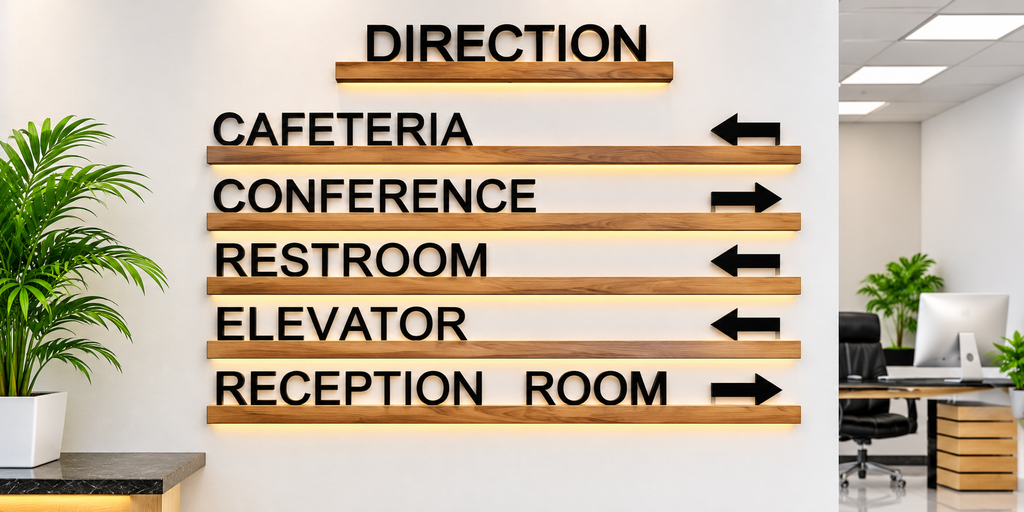
Directional signs guide visitors towards specific destinations using arrows, text, numbers, and symbols.
Common examples include:
- Reception and information desks.
- Elevators and staircases.
- Conference rooms.
- Restrooms.
- Cafeterias and waiting areas.
- Emergency exits.
These signs should appear before visitors reach a decision point, such as a corridor intersection or elevator lobby.
Room Identification Signs
Room identification signs display the names, numbers, or functions of individual spaces. They are commonly installed beside or directly outside room entrances.
Examples include:
- Private offices.
- Meeting rooms.
- Staff rooms.
- Conference halls.
- Medical consultation rooms.
- Restrooms.
A consistent design makes it easier to recognize different spaces throughout the building.
Directory and Floor Identification Signs
Directory signs provide an overview of a building’s layout. They are especially useful in multi-storey commercial properties, shopping centres, hospitals, and large office complexes.
A directory may include department names, floor numbers, business listings, and directional information.
Floor identification signs also help visitors confirm their location after using elevators or staircases.
Informational and Regulatory Signs
Some signs communicate instructions rather than directions. They help visitors understand building policies and identify areas with specific requirements.
Examples include:
- Authorized personnel only.
- No smoking.
- Keep this area clear.
- Reception information.
- Restricted access.
- Safety instructions.
These signs should communicate their message quickly without unnecessary wording.
Best Materials for Modern Interior Signage
Material selection affects the appearance, durability, maintenance requirements, and overall cost of a signage project. The best option depends on the building’s design, installation location, and budget.
| Material | Main Features | Suitable Applications |
|---|---|---|
| Acrylic | Smooth finish, versatile colours, modern appearance | Offices, reception areas, room signs |
| Aluminium | Lightweight, durable, clean metallic look | Directories and directional signs |
| Stainless steel | Premium appearance and strong construction | Corporate interiors and executive spaces |
| Wood | Natural texture and warm appearance | Hotels, restaurants, creative offices |
| Glass | Minimal and sophisticated design | Modern offices and premium interiors |
| PVC | Lightweight and budget-friendly | Temporary and general-purpose signage |
Acrylic Signage
Acrylic is a popular option because it offers a clean appearance and can be manufactured in different colours, shapes, and thicknesses.
Businesses can use flat acrylic panels, dimensional lettering, printed graphics, and layered designs to create attractive interior signs.
Metal Signage
Aluminium and stainless steel are suitable for businesses looking for a more refined appearance. Brushed metal finishes, dimensional lettering, and engraved details can complement contemporary architectural interiors.
Wooden Signage
Wood creates a warmer visual atmosphere. Hotels, restaurants, wellness centres, and businesses with natural interior themes often use wooden signs to maintain consistency with their surroundings.
How to Design Wayfinding Signage That Actually Works
An attractive sign is not necessarily an effective sign. Successful navigation depends on how quickly people can understand the information and decide where to go.
1. Understand the Building Layout
Start by studying the complete floor plan. Identify entrances, exits, corridors, elevators, staircases, departments, and high-traffic areas.
This helps designers determine where visitors are most likely to need guidance.
2. Create a Consistent Visual Language
Use the same typography, colour palette, icon style, and design approach throughout the building.
For example, a corporate office might use dark grey backgrounds, white lettering, and a single accent colour for directional arrows.
Consistency helps visitors recognize signage immediately, even when they are moving between different floors.
3. Choose Readable Typography
Text should be easy to understand from an appropriate viewing distance. Avoid overly decorative fonts, unnecessary uppercase text, and cramped layouts.
Consider the following:
- Use clear, familiar typefaces.
- Maintain sufficient letter spacing.
- Choose appropriate font sizes.
- Use strong contrast between text and background.
- Keep messages short and specific.
4. Position Signs at Decision Points
Placement is just as important as design. A directional sign installed after a visitor has already passed the correct hallway provides little value.
Useful locations include building entrances, corridor intersections, elevator lobbies, stairway landings, and major department entrances.
5. Include Recognizable Symbols
Icons can communicate information faster than lengthy descriptions. Symbols for restrooms, elevators, stairs, parking, and accessibility are familiar to many visitors.
However, symbols should complement written information rather than replace essential wording.
Which Industries Benefit Most From Interior Wayfinding Signs?
Almost every commercial building can benefit from a structured navigation system, but some environments have particularly high requirements.
Corporate Offices
Corporate environments need clear directions for reception, departments, meeting rooms, executive offices, and employee facilities. Professional signage also helps maintain a consistent brand identity.
Hospitals and Healthcare Facilities
Hospitals contain multiple departments, treatment areas, laboratories, waiting rooms, and emergency facilities. Clear directions can reduce confusion for patients, visitors, and staff.
Healthcare signage should prioritize readability, accessibility, and logical placement.
Shopping Centres and Retail Stores
Large retail environments require visitors to locate individual stores, restrooms, food courts, elevators, and customer service desks.
Floor directories and overhead directional signs are particularly useful in these spaces.
Hotels and Hospitality Businesses
Hotels need clear room numbers, floor identification, restaurant directions, reception signs, and facility information. Attractive materials and coordinated designs can complement the property’s interior style.
Educational Institutions
Schools, colleges, and universities often contain multiple buildings, classrooms, laboratories, administrative departments, and student facilities. A consistent signage system helps students and visitors navigate these environments independently.
Common Mistakes to Avoid When Installing Interior Signage
Even well-designed signs can fail when businesses overlook practical details during planning and installation.
Some common mistakes include:
- Too much information: Long descriptions make signs difficult to understand quickly.
- Poor visibility: Low contrast or unsuitable lighting can make important information difficult to read.
- Inconsistent designs: Different colours, fonts, and symbols can confuse visitors.
- Incorrect placement: Signs installed too late may not help people choose the correct route.
- Ignoring accessibility: Small text and unsuitable placement can exclude some visitors.
- Outdated information: Old department names, room numbers, and directories create unnecessary confusion.
Businesses should review their signage periodically, particularly after renovations, department changes, or building expansions.
How Much Do Interior Wayfinding Signs Cost?
The cost depends on several factors, including material selection, sign dimensions, design complexity, manufacturing methods, and installation requirements.
A simple printed room identification sign will generally require a different budget from a custom metal directory or illuminated dimensional display.
The following factors influence the overall project cost:
- Material: Acrylic, aluminium, stainless steel, and glass have different manufacturing costs.
- Dimensions: Larger signs generally require more material and production time.
- Customization: Custom logos, graphics, finishes, and dimensional lettering can increase complexity.
- Lighting: LED illumination requires additional components and installation work.
- Installation: Wall conditions, mounting methods, and the number of locations affect labour requirements.
- Project quantity: Producing multiple signs within one coordinated project can help improve cost efficiency.
For accurate budgeting, businesses should request a quotation based on their building layout, required sign types, preferred materials, and installation locations.
Expert Tips for Getting Better Results From Your Signage Project
A successful project begins with planning rather than manufacturing. Before placing an order, consider these practical recommendations.
- Map the visitor journey: Think about how someone moves from the main entrance to their destination.
- Prioritize important locations: Reception, elevators, restrooms, and major departments should be easy to identify.
- Maintain brand consistency: Use colours, typography, and finishes that complement the business identity.
- Test readability: Check how signs appear from different distances and viewing angles.
- Plan for future changes: Consider interchangeable panels or modular directories when departments may change.
- Work with experienced sign manufacturers: Professional design and fabrication help ensure that signs are suitable for their intended environment.
A complete signage plan should also include a review process so businesses can identify confusing routes and update information when necessary.
Frequently Asked Questions
1. What is the main purpose of interior wayfinding signs?
Their main purpose is to help people navigate indoor environments without confusion. They identify important locations, provide directions, and communicate useful information. Businesses use them to improve visitor experiences, support employees, and create more organized commercial spaces.
2. Where should interior directional signs be installed?
Directional signs should be positioned at entrances, corridor intersections, elevator areas, staircases, and other locations where visitors need to make navigation decisions. They should appear early enough to help people choose the correct route rather than after they have already passed their destination.
3. Which material is best for interior office signage?
Acrylic is a versatile choice for modern offices because it offers a clean finish and multiple customization options. Aluminium and stainless steel are also popular for premium corporate environments. The right material depends on the interior design, durability requirements, available budget, and preferred appearance.
4. Are interior wayfinding signs suitable for small businesses?
Yes. Small businesses can benefit from simple room identification, reception, restroom, and directional signs. Even a compact office or retail store becomes easier to navigate when visitors can quickly identify important areas. A small, consistent signage system can make the environment look more professional.
5. How can signage improve accessibility inside a building?
Accessible signage uses readable typography, sufficient colour contrast, recognizable symbols, and appropriate placement. Depending on local regulations and building requirements, it may also include Braille, tactile lettering, and accessible restroom identification to help people with different needs navigate independently.
6. Can interior signs match a company’s branding?
Yes. Custom signage can incorporate company colours, logos, typography, materials, and finishes. Acrylic lettering, metal panels, dimensional graphics, and customized directory displays can all be designed to complement an existing brand identity while maintaining clear and useful navigation information.
7. How often should businesses update their interior signage?
Businesses should review their signage whenever departments move, room numbers change, facilities are renovated, or new areas are introduced. A periodic inspection also helps identify damaged signs, outdated information, and visibility problems that may affect the visitor experience.
Final Thoughts
A well-organized building should feel easy to explore, even for someone visiting for the first time. Clear directions, recognizable symbols, consistent designs, and carefully selected materials all contribute to a better indoor experience.
Investing in professionally designed interior wayfinding signs helps businesses improve navigation, support accessibility, strengthen their visual identity, and create more welcoming commercial environments.
The best signage systems combine practical communication with attractive design. By planning placement carefully, choosing suitable materials, and keeping information consistent, businesses can create interiors where employees, customers, and visitors always know where they need to go.